Tuesday, August 8, 2023

Steve Ditko's Military Service


Steve Ditko, one of the most revered artists in comic book history, was an intensely private man, rarely granting interviews and vigorously protecting any details of his personal life.  A few books about Ditko have attempted to present a picture of his life but tend to be sparse when it comes to details.

One aspect of the artist’s background is the fact that he served in the U.S. Army in the years following World War II.  Blake Bell, in his book Strange and Stranger: The World of Steve Ditko (Fantagraphic Books, 2008), uses information derived from Ancestry.com, to inform us that Ditko enlisted on October 26, 1945 in Harrisburg, Pennsylvania.  “He entered as a Private in the ‘Field Artillery’ branch of the ‘Regular Army,’” says Bell.  That information can be viewed here:


Bell goes on to say that Ditko served as “part of the constabulary forces stationed in Germany,” but doesn’t reveal where he got that information.  And he doesn’t say how long Ditko’s service lasted or when exactly he was discharged.  David Currie’s biography Ditko Shrugged (Hermes Press, 2020) repeats some of this same information and vaguely adds that Ditko’s discharge came “in the late 1940s.”

But now a document (which apparently wasn’t available when Bell wrote his book), discovered on Ancestry.com by yours truly, gives us some additional information.  In 1950 – May 6 to be exact – Ditko applied to the Commonwealth of Pennsylvania for World War II veterans’ compensation benefits.  The document confirms the October 26, 1945 date for the start of Ditko’s service, as reported by Bell.  It also tells us that his service ended on August 12, 1948 at Camp Kilmer, New Jersey, which is new information.


In October 1945, Ditko was just 18 years old and fresh out of high school.  At the time, he lived at 1337 Tennessee Avenue in Johnstown, Pennsylvania, in a house that, according to real estate records, was built in 1918.  And according to census records, Steve had lived there since at least the age of 13.  I’ve been unable to find a photo of the Ditko home, but here’s one taken from the backyard of a neighboring house that gives a good view of the neighborhood.


The benefits application document neither confirms nor disproves the idea that Ditko served overseas.  We do know that during the eligibility period for benefits, which seems to have ended March 2, 1946, Ditko’s service was entirely stateside.  The application was disallowed due to the applicant having “less than 60 days active service during eligibility period.”  This may sound puzzling, because October 26, 1945 (the start of Ditko’s service) to March 2, 1946 (the end of the eligibility period) was 127 days.  But a look at the legislation authorizing the compensation (World War II Veterans’ Compensation Act of Jun. 11, 1947, P.L. 565, No. 248 Cl. 51) provides clarity.  According to the act, the serviceman had to have begun his service before the official end of the war on September 2, 1945 and served at least 60 days.  He would receive $10 for every month of active service within the United States and $15 for every month of active service outside of the United States until March 2, 1946, up to a maximum of $500.  Because Ditko’s service began after the war ended, he was ineligible for benefits.

Here's the full text of the Veterans’ Compensation Act:

https://www.legis.state.pa.us/WU01/LI/LI/US/PDF/1947/0/0248..PDF

One final bit of data is that Ditko’s Army serial number was 13212777.

Ditko may have been denied compensation by the Commonwealth of Pennsylvania, but he did receive benefits under the GI Bill and used them to attend the Cartoonists and Illustrators School in New York City, studying under Jerry Robinson of Batman fame.  From there he launched into his long and illustrious career.

Tuesday, November 29, 2022

Who Played Clark Kent in the Fleischer/Famous Studios Superman Cartoons?


If you’re at all knowledgeable about the early history of Superman, you know that the character was featured in a series of 17 theatrical cartoons from 1941 to 1943.  And if someone asked you who played Clark Kent in those cartoons, you’d undoubtedly answer Bud Collyer, the same actor who played him on the very popular Superman radio show that began in 1940.  But what if I told you that someone else played the role in the cartoons?  You’d think I’d been smoking something.  But while Collyer was certainly the voice of Clark Kent in the early installments, I’m convinced that someone else replaced him in the later ones.

As you probably know, these lavish and innovative cartoons were originally produced by Fleischer Studios for Paramount until Paramount took over production directly and renamed the operation Famous Studios.   The Famous Studios cartoons had a lower budget than the Fleischer ones and are not as highly regarded today by fans and critics.

But getting back to the question of who played Clark Kent, while there were no voice actor credits in the Superman cartoons, anyone who’s listened to the radio show will recognize Collyer’s distinctive voice in the first seven installments.  But beginning in Volcano, the eighth and penultimate of the Fleischer-produced ones, we hear what sounds like a different actor playing the part.  To my ears, the tonal quality is not the same; it’s more laconic, less engaging, with a very slight hint of a southern drawl.

To illustrate what I’m talking about, here's a clear example of Collyer’s Clark Kent from The Artic Giant (1942):


But in Volcano (1942), the voice sounds very much unlike Bud Collyer:


For a more direct comparison, here's Collyer in The Mechanical Monsters (1941):


Notice how the actor deepens his voice when he changes from Clark to Superman and declares, “This is a job for Superman!”  It was a bit of schtick from the radio show, employed to make it clear to listeners that the character was changing personas.

Now here's a similar transformation in Japoteurs (1942):


Notice that this time, the voice actor doesn’t deepen his voice the way Collyer did.  There also appears to be less enthusiasm in his delivery.  It would seem that this isn’t Collyer.
So if it’s true that another actor took over the part, who was he?  Online sources are no help.  At this writing, Imdb lists Collyer as starring in all 17 installments of the series.  Most offline sources don’t provide the answer either.  In the book Super Boys - The Amazing Adventures of Jerry Siegel and Joe Shuster--the Creators of Superman (2013), author Brad Riccca alludes to a casting change by stating, “The voice of Superman for the series was initially provided by Bud Collyer.” But he doesn’t say who replaced Collyer.
The answer comes in the recently published Cartoon Voices of the Golden Age, 1930-70 Vol. 1 by Keith Scott (2022).  The author cites a news item discovered by Popeye expert Fred Grandinetti that solves the mystery (though he didn’t know the exact date or newspaper of the item).  It’s from the column “The Night Watch” by Jack Kofoed in The Miami News, Monday, April 27, 1942 and reads, “Lee Royce, the handsome baritone at Jimmie’s on the Trail, is the voice of ‘Bruto,’ the heavy-jawed enemy of ‘Popeye,’ in the Fleischer movie cartoons made here.  He also is both voice and model for Fleischer’s ‘Superman’ cartoons.”


So who was this Lee Royce guy?  In addition to being a popular baritone singer, Royce was comedian Joe Besser’s straight man from 1937 to 1940.  (Besser was best-known as one of the Three Stooges in the late 1950s but had a long career previously.)  Before that, in the mid-1930s, Royce was part of various burlesque revues that toured the Supreme Circuit.  Sometimes he appeared solo, sometimes with singing and dancing partner Edna Mae.  In early 1941 and again 1943, Royce appeared in the touring Greater Marcus Show.  In late 1941 and early 1942, Royce was featured at a couple of Miami area nightclubs, Bill Jordan’s Bar of Music and Jimmie’s.  It was during this period that he was said to have done the Superman cartoons.  That makes sense, since the Fleischer studios were in Miami.  In 1949, Royce was still in the Miami area, performing in the Minsky’s Follies revue at the Colonial Inn and the burlesque show at Club Monte Carlo.

Now that we know who the replacement actor was, the next question is, why would Paramount make such a switch?  A logical guess would be that since the change happened around the time Paramount was not only taking over production from Fleischer but cutting the budget, it could be that the studio didn’t want to continue paying a radio star’s salary for such a limited role.  In contrast to the radio show, Superman rarely spoke in the cartoons, and Clark Kent typically had only a few lines.  (Clearly, the spectacle of a man flying through the air, battling giant sized monsters and machines was considered more important than a lot of dialogue.)

There are still some who challenge the idea that Bud Collyer wasn’t in all of the Superman cartoons.  As pop culture historian Steven Thompson says, “Good luck with this. I never had much luck convincing folks about another long-held Superman belief.”  But for me, the answer is definitive.  It’s a question that’s been bothering me for years, and it’s good to finally see it resolved.

Thanks to Keith Scott and Den McHenry for their help with this article.


For the record, here are the 17 Superman theatrical cartoons produced from 1941 to 1943.  They can all be found on YouTube.

Fleischer Studios

1. Superman (September 26, 1941)

2. The Mechanical Monsters (November 28, 1941)

3. Billion Dollar Limited (January 9, 1942)

4. The Arctic Giant (February 27, 1942)

5. The Bulleteers (March 27, 1942)

6. The Magnetic Telescope (April 24, 1942)

7. Electric Earthquake (May 15, 1942)

8. Volcano (July 10, 1942)

9. Terror on the Midway (August 30, 1942)

Famous Studios

10. Japoteurs (September 18, 1942)

11. Showdown (October 16, 1942)

12. Eleventh Hour (November 20, 1942)

13. Destruction, Inc. (December 25, 1942)

14. The Mummy Strikes (February 19, 1943)

15. Jungle Drums (March 26, 1943)

16. The Underground World (June 18, 1943)

17. Secret Agent (July 30, 1943)


Monday, November 28, 2022

Wally Wood at Atlas


When Wally Wood took over Marvel’s Daredevil title in late 1964, he was greeted with much fanfare.  In fact, it was a welcome fit for a king.  A blurb on the cover of issue number 5, declared, “Under the brilliant artistic craftsmanship of famous illustrator Wally Wood, Daredevil reaches new heights of glory!”  Editor Stan Lee was known for bucking the prevailing trend by crediting his comic books’ creators, but hailing a new artist on the cover was virtually unprecedented.  Lee clearly had a great deal of respect for Wood’s talent, and few fans today would challenge his assessment.  (Lee and Wood's relationship would later sour, but that's another story.)

Though it might have seemed that way, Daredevil #5 was not Wood’s first work for Lee or the company.  In the late 1950s, Marvel (then known as Atlas), featured his contributions in a half dozen stories.  Most critics don’t consider these among the artist’s most significant works, and they certainly aren't his best, but any vintage Wood is still, I believe, worth a look.

The mid-1950s were a challenging time for Wood.  He had established his reputation with William Gaines’s EC comics, turning out first-rate work in the science fiction, horror, humor, and war genres.  When EC dumped its comic book line and converted MAD into a magazine, Wood continued to work for the company in the retooled title, but not as prolifically as before.  To fill the gap, Wood turned to other income sources.  He drew cartoons for men’s magazines like Gent, Dude, Nugget, and Playboy and illustrations for sci fi digests Amazing Stories and Galaxy Science Fiction, as well as the latter’s book covers.   He inked Jack Kirby’s pencils on the Sky Masters comic strip and DC’s Challengers of the Unknown comic book.  But before that, he took a brief detour to Atlas.

Credits and some synopses from the Grand Comics Database (comics.org).


Journey into Mystery (1952 series) #39 October 1956

The Executioner! 4 pages
Job Number: K-225
Pencils and Inks: Wally Wood

Synopsis (by JD): Scientist Dr. Morey is about to send a man up to a satellite orbiting Earth.  He’s been given the nickname “the executioner” because of his disregard for the safety of the men who work under him.  But there’s something different about the brave soul preparing to take part in this new experiment.


Mystic (1951 series) #52 October 1956

The Effigy 4 pages
Job Number: K-298
Pencils and Inks: Wally Wood
Script: Carl Wessler

Synopsis (from GCD): A criminal takes an effigy from a voodoo cult so that they cannot use it to compel him to surrender himself to the police.


Western Gunfighters (1956 series) #22 October 1956

Rustler at Large! 5 pages
Job Number: K-455
Pencils and Inks: Wally Wood

Synopsis (by JD): When cattle rustler Mace Forester escapes from jail, deputy Miles must re-capture him or face shame and dismissal.


Journey into Unknown Worlds (1950 series) #51 November 1956
(On-Sale Date: August 22, 1956)

He Was Nobody! 4 pages
Job Number: K-411
Pencils and Inks: Wally Wood
Script: Carl Wessler

Synopsis (from GCD): A magician leads a group of townsfolk in saving their town after a flood.


Marvel Tales (1949 series) #152 November 1956

When the Bubble Burst! 3 pages
Job Number: K-657
Pencils: Joe Orlando
Inks: Wally Wood

Synopsis (by JD): In the year 1999, a Martian breaks into the White House and tries to kill the President in order to gain propaganda points in Mars’s war with the Venusians.

Note: Wood and Orlando had shared a studio in the early 1950s and collaborated on artwork for such companies as Fox Features and Avon Comics.  Both were prolific contributors to EC Comics.


Journey into Mystery (1952 series) #51 March 1959
(On-Sale Date: December 1958)

The Creatures in the Volcano 5 pages
Job Number: T-153
Pencils (and possibly script): Jack Kirby
Inks: Wally Wood

Synopsis (from GCD): A chief of a Pacific island tribe finds aliens in a volcano preparing to conquer Earth. He thinks his people will not believe him, so he instead agrees to sell the island to the US for nuclear tests, which destroys the aliens.

Note: Technically, this is not an Atlas book, as the company was no longer using that name.  At the time, Wood was also inking Kirby’s pencils on the Sky Masters comic strip and DC’s Challengers of the Unknown comic book.


Disputed Attributions

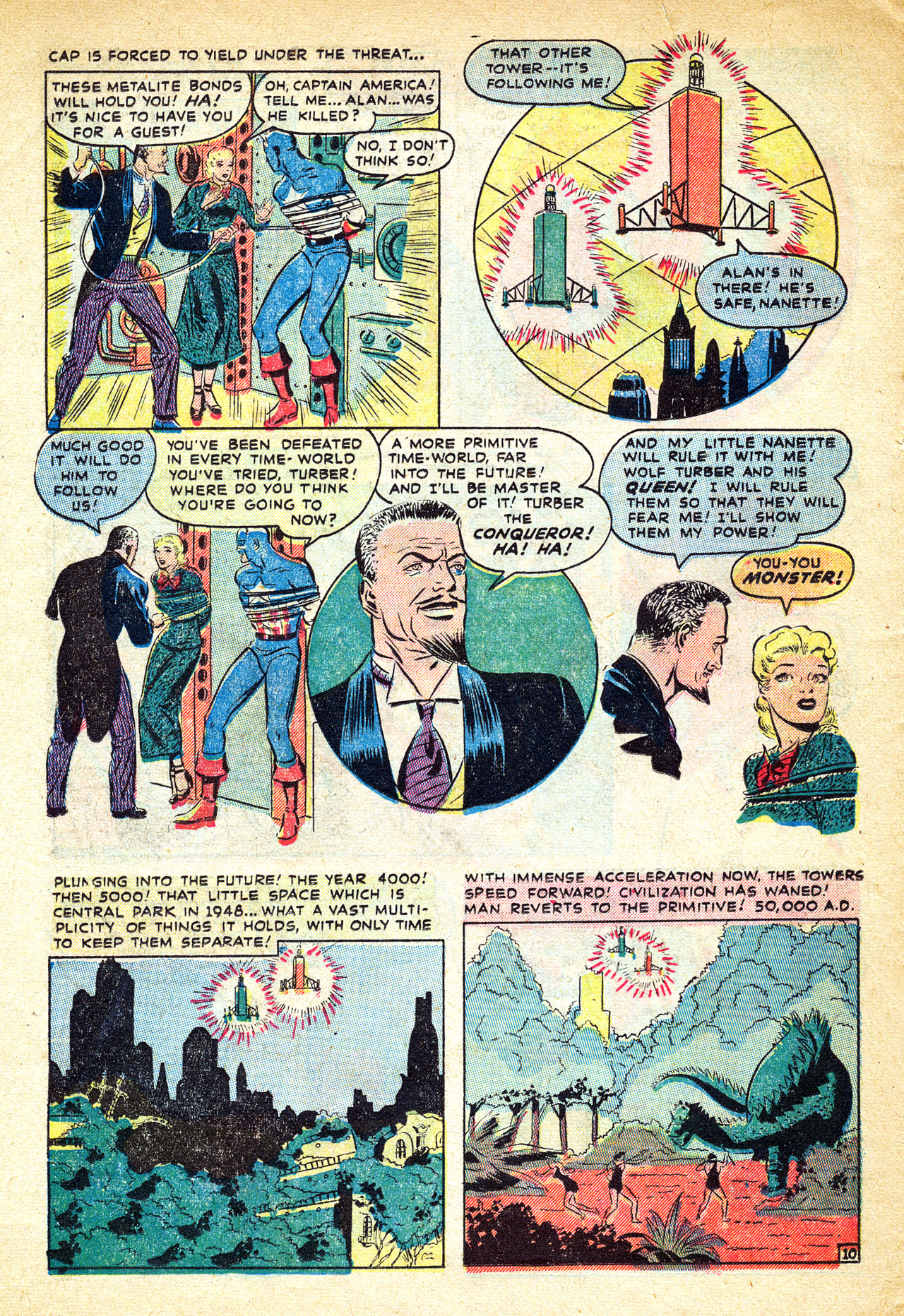
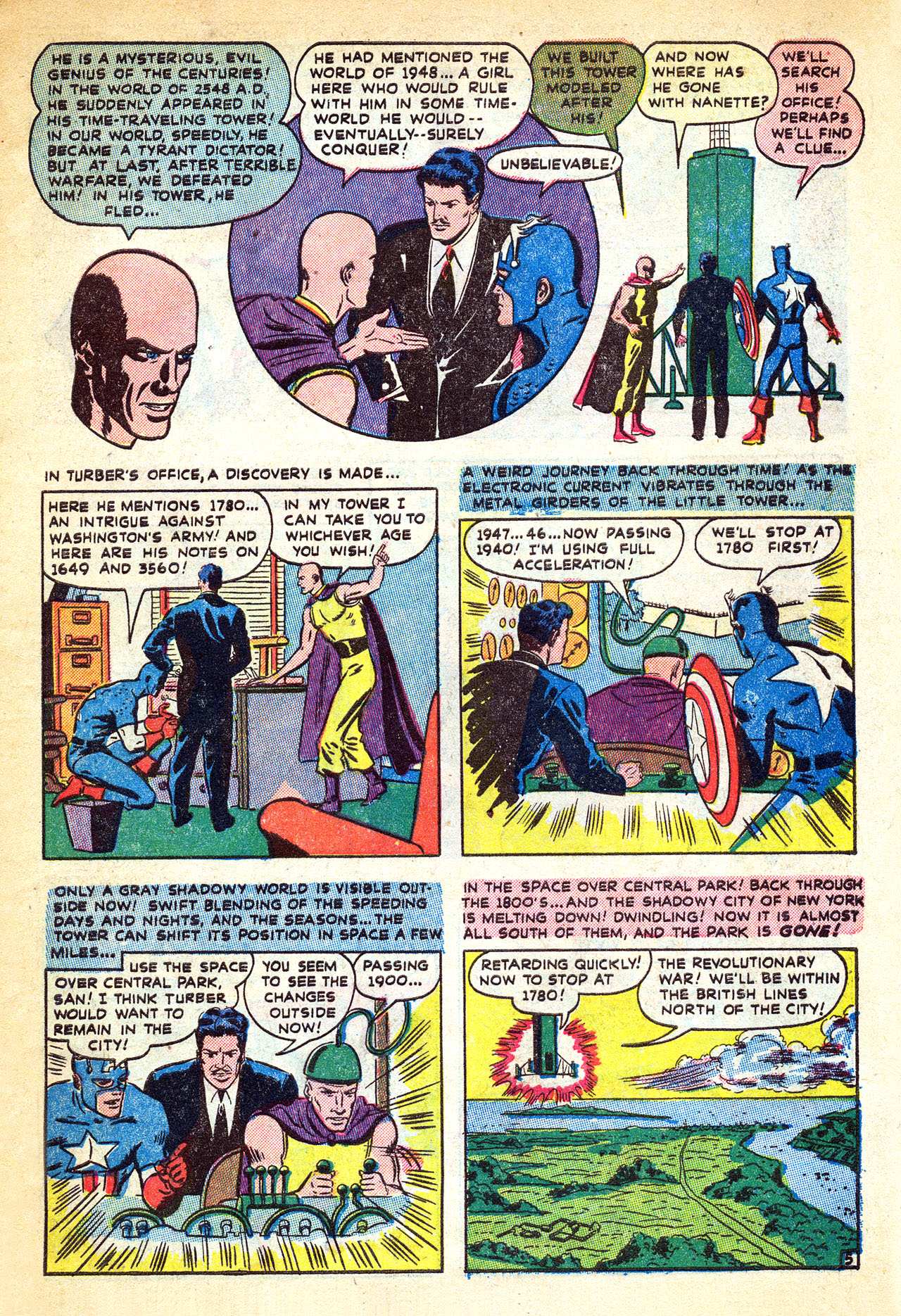
There are a couple of additional early Marvel stories that some have attributed to Wood, but I personally don't see much of him in these comics.  They're included here for the sake of completeness.


Captain America Comics (1941 series) #73 July 1949
(On-Sale Date: March 27, 1949)

The Outcast of Time 12 pages

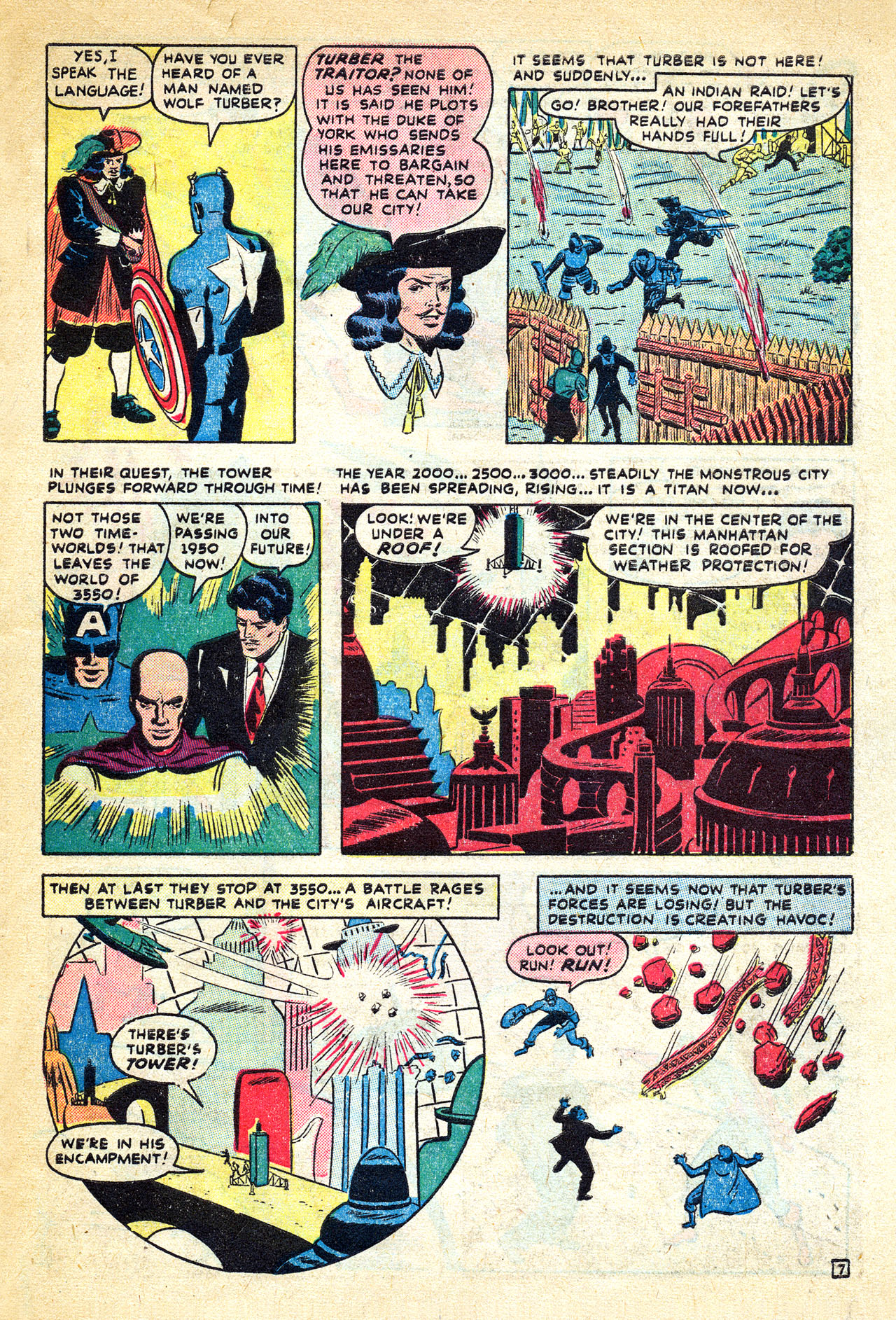
GCD Indexer Notes: Nick Caputo speculates that Wally Wood may have contributed to the story, noting the figures and poses on several pages. This falls into the period of Wood's early comic book work, making it a possibility.


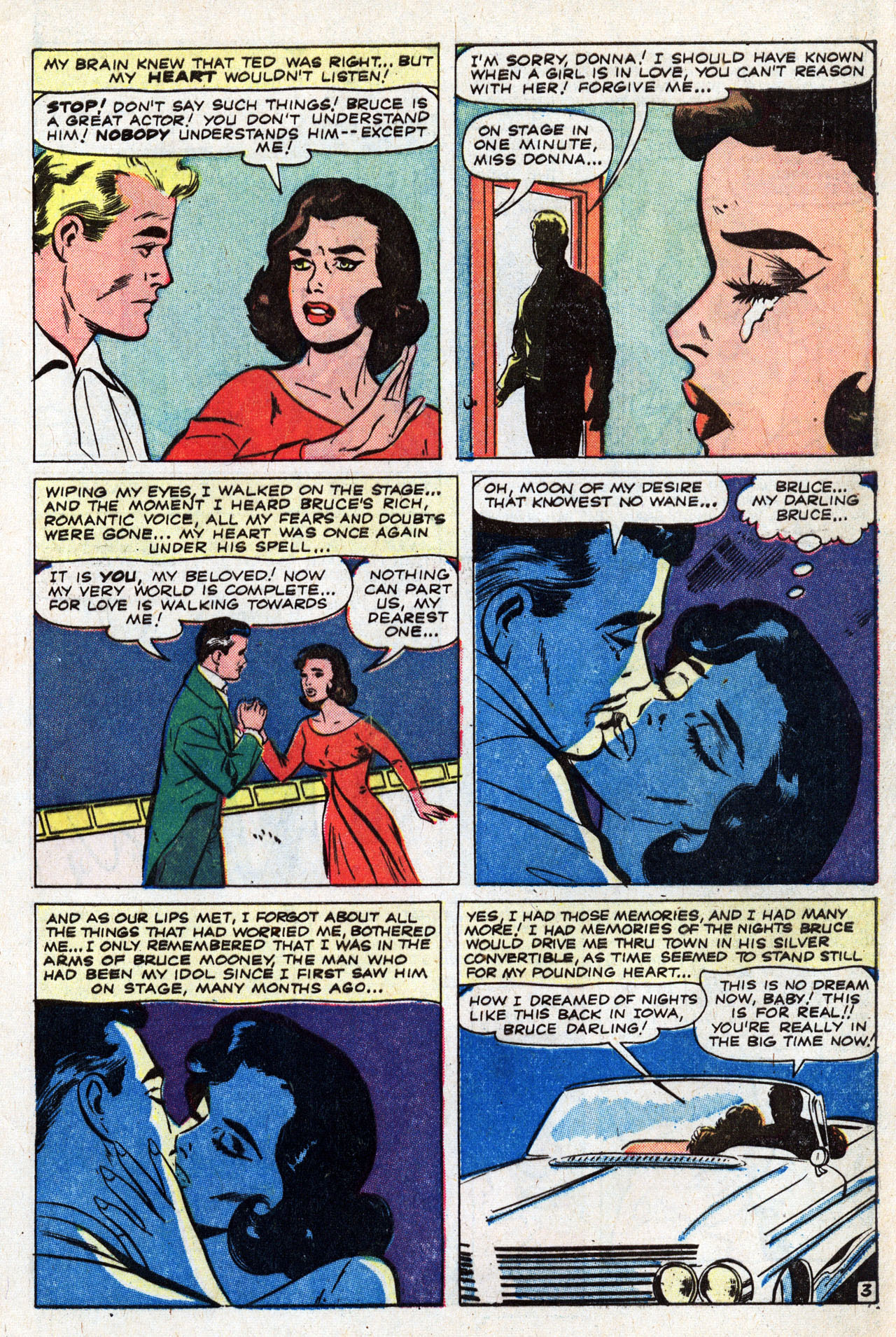
Love Romances (1949 series) #95 September 1961
(On-Sale Date: July 5, 1961)

My Engagement Ring! 7 pages

GCD Indexer Notes: Per Jim Vadeboncoeur Jr: "Previous indexer had penciler credit for Dick Giordano, but these are most likely Wood's pencils - who was heretofore unknown to have worked in the Colletta Studio." Nick Caputo sees some Wood-like figures, particularly the women, but suspects they are swipes and not actually Wood. J. David Spurlock denies any Wood involvement in this story.